


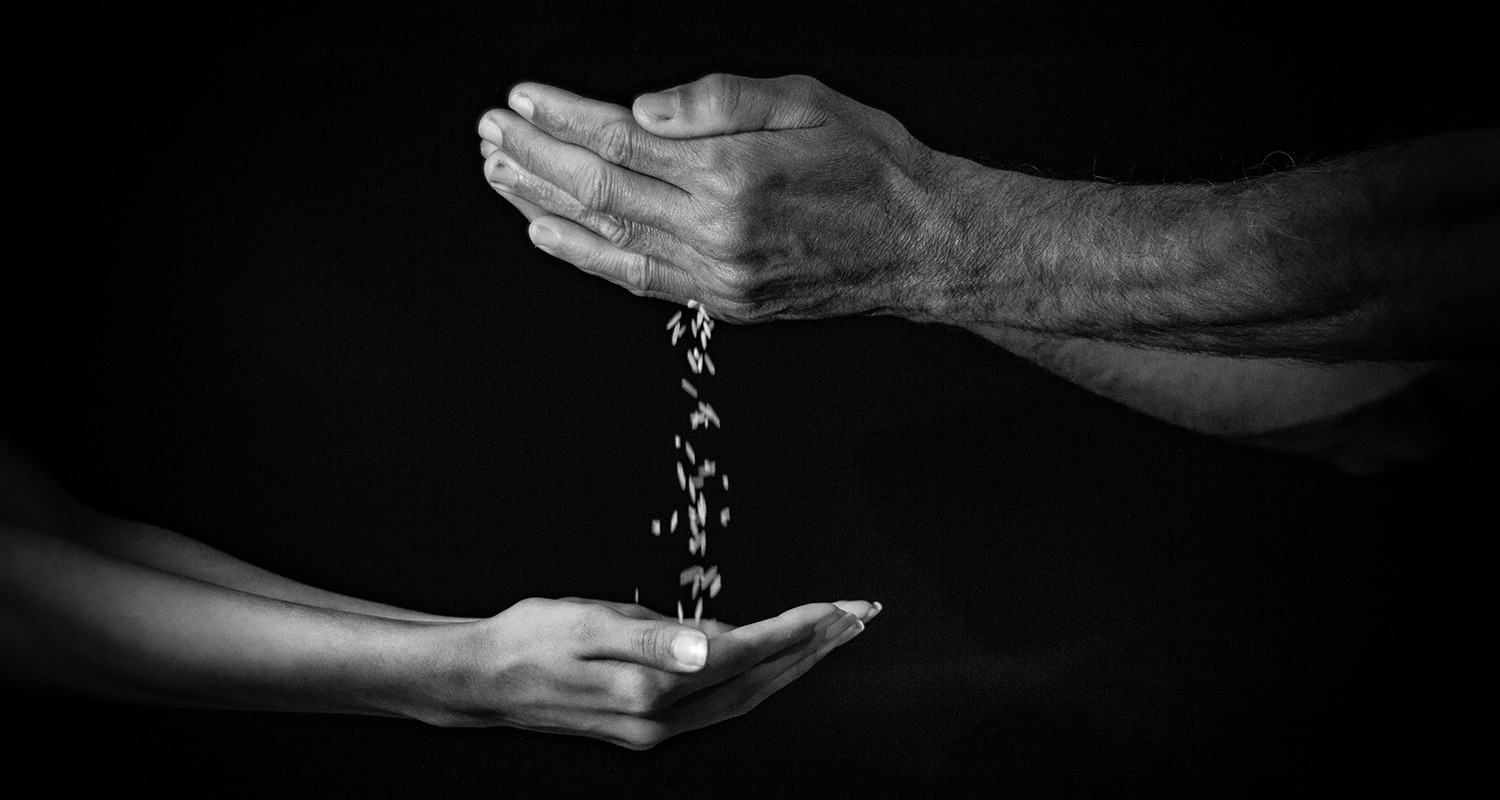
It’s a Sunday morning in rural Bangladesh, and women of all ages line the walls at Shambatti Church of the Nazarene, a tribal-based local Church of the Nazarene, cradling bowls in their hands. The congregation sings as one by one, the women pour the contents of their bowls into a large sack at the feet of Karuna Pathara.
Karuna is the South Asia Field’s Nazarene Missions International (NMI) president, and her husband, Ramesh, serves as the District Superintendent in Bangladesh. The couple felt called to encourage the growth of a missional mindset in local churches. This included helping them begin thinking about how to share their time and resources with the global church.
“You don’t need to give money,” Karuna told the congregation. “You give what you have.”
Those with chicken farms could give eggs, she said. Farmers could give a goat. What mattered was giving back to God from what he had provided. Immediately, hands in the crowd shot up.
“Can we give now?” one woman asked.
When Ramesh and Karuna agreed, the women in the room got up and walked out.
Ten minutes passed, and the women began to trickle back in during worship—this time clutching bags and bowls of rice. One by one, the women approached Karuna and poured their gifts into the sack at her feet. Some gave large bowls of grain, some simply a handful. The message was clear: these women wanted to actively participate in the global work of Jesus however they could.
The community around Shambatti Church of the Nazarene is small and under-resourced, and the congregation had learned little about giving back to God. But Ramesh and Karuna knew that biblical generosity doesn’t require wealth.
“We think the less fortunate won’t give,” Ramesh says, calling attention to the misconception. “There is no poor man in the sight of the Lord. The mission isn’t only a spiritual encounter, but it is a physical sacrifice as well. Intentionally, they’re sacrificing something to give.”
Now, the congregation sets aside one Sunday each month for missional giving. Throughout the weeks, the women go about their days cooking, harvesting, and managing their homes, setting aside a handful of rice each time they prepare food for their family. At the end of the month, each household brings what it has set aside as an offering.
“Whatever they’re eating, they’re eating a little less because they’re giving,” Ramesh says. “So the mission is on their dining table.”
At the Sunday service, the church sings as they bring their offerings.
“Lord, what can I give,” they sing, “for you, you gave your son, and I’m giving you what I have.”